
The Science Behind Plywood Manufacturing and Environmental Standards
The manufacturing of plywood is a precision process that transforms raw logs into high-performance panels. It begins with log preparation: suitable peeler logs — straight, knot-free trunks — are steamed to soften the wood, then rotary-cut into thin veneers typically 0.5 to 3 mm thick. These veneers are dried to a moisture content of 8–12%, sorted by grade, and then prepared for gluing.
The gluing stage is where science meets art. Adhesive — most commonly urea-formaldehyde (UF) for interior grades or phenol-formaldehyde (PF) for exterior grades — is spread evenly on each veneer surface at approximately 8–12 grams per square meter. The veneers are then stacked in a cross-grain configuration and pre-pressed at 0.2–2 MPa to form a cohesive mat. The mat enters a hot press where temperatures of 110–140°C and pressures of 1.0–1.5 MPa cure the adhesive and permanently bond the layers. Total hot-press time ranges from 6 to 15 minutes depending on panel thickness.
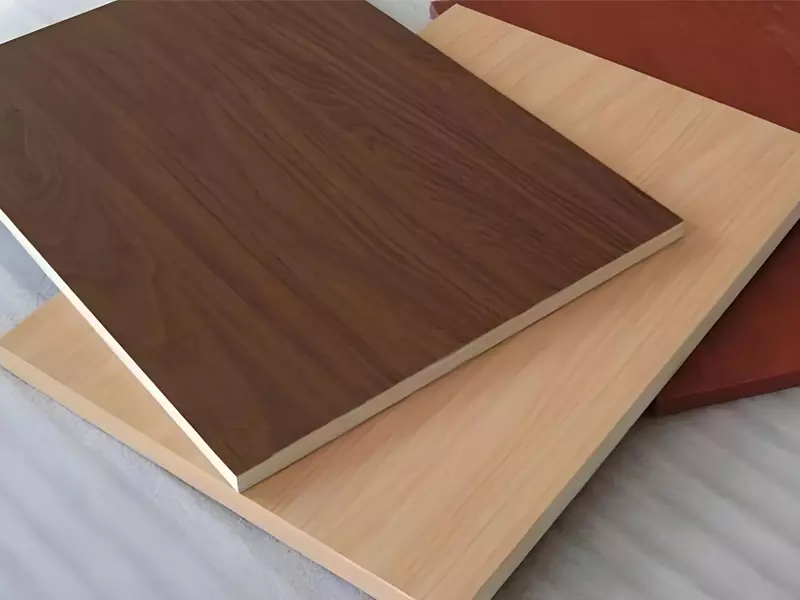
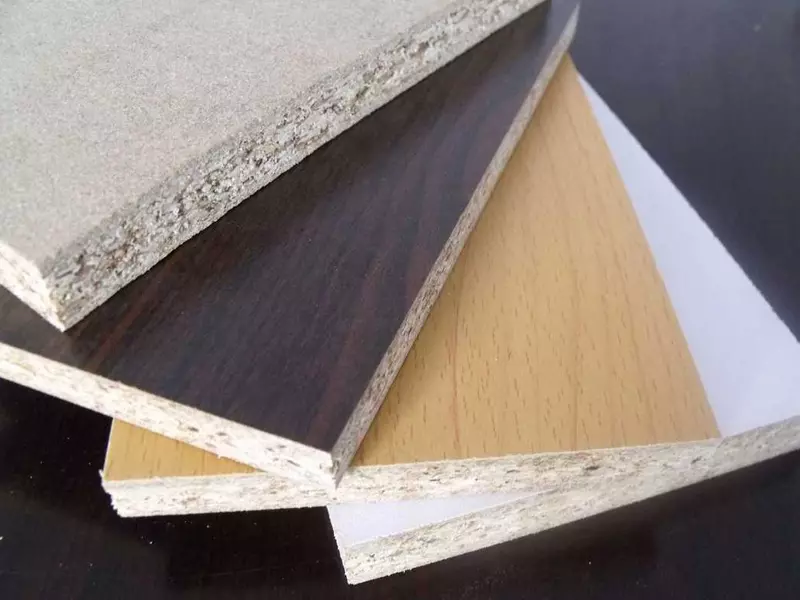
After pressing, panels are cooled, trimmed, sanded, and graded. The final product is tested for bonding strength, formaldehyde emission, moisture resistance, and surface quality. According to GB/T 17657-2022, rigorous physical and chemical tests ensure every batch meets national standards.
Environmental concerns have driven revolutionary changes in adhesive technology. Traditional UF resins release formaldehyde, a Class I carcinogen recognized by the International Agency for Research on Cancer. In response, researchers have developed soy-protein-based aldehyde-free adhesives. Recent studies show that soybean-based adhesives, when modified with compound flame retardants, achieve wet bonding strength of 1.12 MPa — exceeding the national standard — while reducing formaldehyde emissions to nearly zero. These bio-based adhesives represent the future of green plywood production.
China's 2021 standard GB/T 39600 establishes three formaldehyde grades: ENF (≤0.025 mg/m?), E0 (≤0.050 mg/m?), and E1 (≤0.124 mg/m?). The European standard EN 717-1, using the chamber method, sets an E1 limit of 0.124 mg/m? as well. These converging standards reflect a global commitment to indoor air quality.
Plywood manufacturing is no longer just about strength — it is about producing engineered wood that is safe, sustainable, and fit for the 21st century.
Previous: No More