
Moisture Resistance and Environmental Adaptability of Engineered Wood Panels
Moisture resistance is a core indicator that determines the service life and environmental adaptability of wood-based panels. Humidity and temperature changes in indoor and outdoor environments are the main causes of panel deformation, mildew and structural damage. Plywood, MDF and particle board show huge differences in water resistance and environmental stability, which provide important basis for material selection in different regional and spatial scenarios.
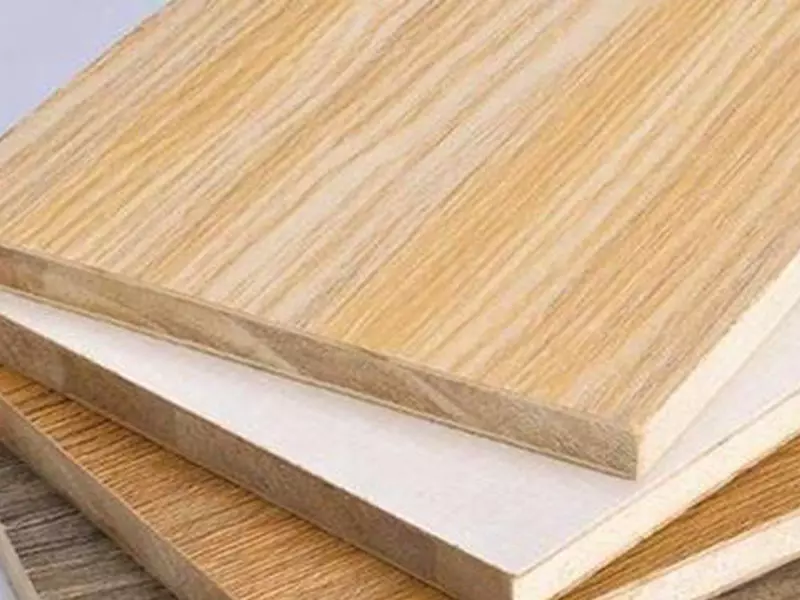
Plywood has the best comprehensive environmental adaptability. High-quality exterior-grade plywood adopts waterproof phenolic adhesive and compact cross-layer structure, which can effectively block water penetration and resist humid air erosion. It has low water absorption and small dimensional change after moisture absorption, and can work stably in kitchens, balconies, outdoor corridors and other high-humidity environments for a long time. Its excellent weather resistance also enables it to adapt to seasonal temperature and humidity changes in different regions.
MDF has poor natural moisture resistance. Its internal porous fine fiber structure easily absorbs water molecules, leading to board swelling, deformation and delamination after moisture absorption. Although modified moisture-proof MDF exists in the market, its waterproof performance is limited and the cost is higher. Therefore, ordinary MDF is only suitable for dry and ventilated indoor spaces such as living rooms and bedrooms, and is prohibited from being used in humid and closed environments.
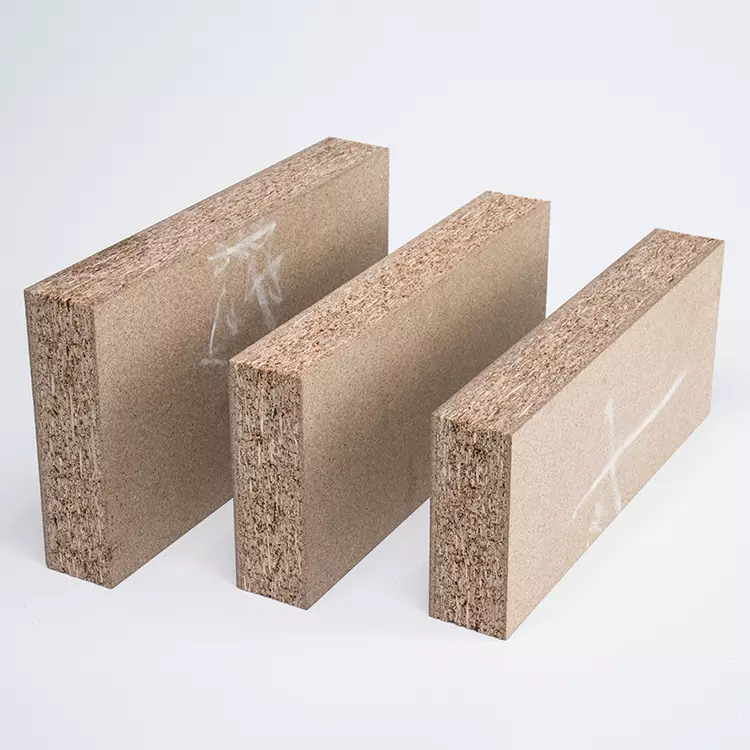
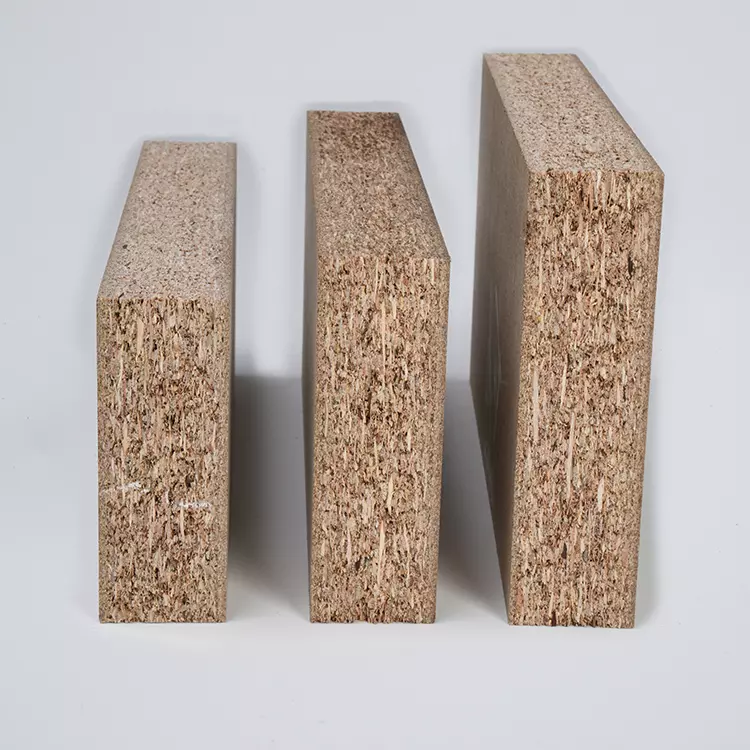
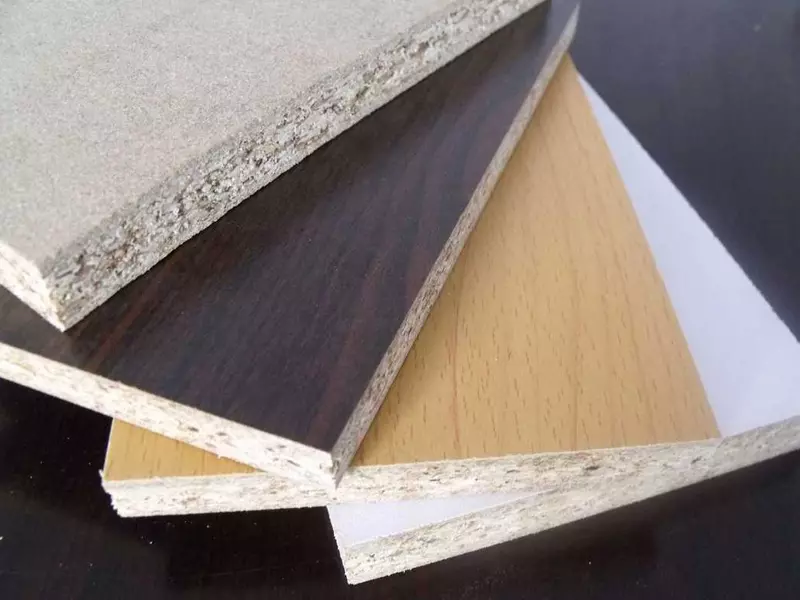
Particle board has the worst moisture resistance. The large gaps between internal wood particles accelerate water absorption and diffusion. In humid environments, particle board is prone to bulging, mildew and structural loosening, and the damage is mostly irreversible. It can only be used in dry indoor low-humidity scenarios. In practical engineering, matching panels according to environmental characteristics can effectively extend material service life, reduce maintenance costs and avoid quality problems caused by improper material selection.